We're going to call this the "Barga Effect":
Chocolate lovers, take heart: A Japanese study finds that flavonoid-rich dark chocolate can improve coronary blood flow.
The study looked at what's known as coronary flow velocity reserve (CFVR), an indicator of the ability of the coronary arteries to dilate and allow more blood flow in response to medications.
The two-week trial included 39 healthy adults, average age 29, who ate either 550 milligrams per day of dark chocolate versus white chocolate with no flavonoids.The researchers used Doppler echocardiography to assess CFVR at the start and end of the study. They also measured the participants' blood pressure, blood lipids and two markers of oxidative stress.
Participants who ate dark chocolate showed significantly improved CFVR after two weeks, while those who ate white chocolate showed no change, the study found."Flavonoid-rich dark chocolate intake had acute effects in improving coronary function in healthy adults, as compared to non-flavonoid white chocolate, independent of changes in oxidative stress parameters, blood pressure and lipid profile," wrote the researchers from Chiba University.
However, they noted that difficulties in blinding (preventing participants from knowing which kind of chocolate they were eating) may have affected the results.
The study was to be presented Sunday at the American Heart Association annual meeting in Orlando, Fla.
More information: The Linus Pauling Institute at Oregon State University has more about flavonoids.
SOURCE: Nov. 4, 2007, presentation, American Heart Association annual meeting, Orlando, Fla.
http://www.washingtonpost.com/wp-dyn/content/article/2007/11/04/AR2007110401019.html
Wednesday, November 7, 2007


Tuesday, November 6, 2007
Jicama Slaw with Chipotle Dressing
Here's the recipe for the slaw to accompany the crab cakes:
(Serves 8)
1 large jicama, peeled and finely shredded
½ Napa cabbage, finely shredded
2 carrots, finely shredded
1 cup mayonnaise
½ cup sour cream
¼ cup canned Chipotle peppers in adobo, mashed
1 tablespoon granulated sugar
Salt and freshly ground black pepper
Place jicama, cabbage, and carrots in a large bowl.
Whisk together the mayonnaise, sour cream, chipotles in adobo, and sugar in a medium bowl.
Season with salt and pepper, to taste.
Pour the dressing over the jicama mixture and toss to coat well.
Refrigerate for at least 30 minutes before serving.
(Serves 8)
1 large jicama, peeled and finely shredded
½ Napa cabbage, finely shredded
2 carrots, finely shredded
1 cup mayonnaise
½ cup sour cream
¼ cup canned Chipotle peppers in adobo, mashed
1 tablespoon granulated sugar
Salt and freshly ground black pepper
Place jicama, cabbage, and carrots in a large bowl.
Whisk together the mayonnaise, sour cream, chipotles in adobo, and sugar in a medium bowl.
Season with salt and pepper, to taste.
Pour the dressing over the jicama mixture and toss to coat well.
Refrigerate for at least 30 minutes before serving.
Monday, November 5, 2007
Maryland Crab Cakes
By request, here's the recipe for the crab cakes that Second Helpings served at Friday night's Harvest event:
Maryland Crab Cakes
(Makes 8 servings)
2 pounds jumbo lump crab meat
2 large eggs
1 cup mayonnaise
1/2 cup fresh bread crumbs
1/4 cup fresh lemon juice
1 Tablespoon Worcestershire Sauce
1 Tablespoon finely chopped parsley
1 Tablespoon Dijon mustard
1 Tablespoon baking powder
1 Tablespoon Old Bay Seasoning
Pick through crab and remove any shell pieces. Set aside.
In a large bowl, combine all ingredients except crab and mix to combine thoroughly.
Add crab and toss GENTLY to prevent breaking up the lumps.
Divide into eight equal portions and shape into one-inch thick patties. Place on an ungreased parchment lined baking sheet and refrigerate for at least 30 minutes.
Preheat oven to 350 degrees F.
Bake the crab cakes for 12 - 15 minutes. Serve immediately.
Maryland Crab Cakes
(Makes 8 servings)
2 pounds jumbo lump crab meat
2 large eggs
1 cup mayonnaise
1/2 cup fresh bread crumbs
1/4 cup fresh lemon juice
1 Tablespoon Worcestershire Sauce
1 Tablespoon finely chopped parsley
1 Tablespoon Dijon mustard
1 Tablespoon baking powder
1 Tablespoon Old Bay Seasoning
Pick through crab and remove any shell pieces. Set aside.
In a large bowl, combine all ingredients except crab and mix to combine thoroughly.
Add crab and toss GENTLY to prevent breaking up the lumps.
Divide into eight equal portions and shape into one-inch thick patties. Place on an ungreased parchment lined baking sheet and refrigerate for at least 30 minutes.
Preheat oven to 350 degrees F.
Bake the crab cakes for 12 - 15 minutes. Serve immediately.
Sunday, November 4, 2007
Building Community One Individual At A Time
Join me this Thursday night at the John H. Boner Community Center's 2007 Harvest Celebration
Thursday, November 08, 2007 at Marian, Inc. 1011 East Saint Clair Street, Indianapolis, IN.
More than just a fundraising event, the Center’s Harvest Celebration is a celebration for the entire near Eastside of Indianapolis.
Each contribution from this event directly benefits the Center’s programs and services while bringing our neighbors together for a night of fun and festivities!
For more information, visit the Boner Center's website at
http://www.enn.org
Thursday, November 08, 2007 at Marian, Inc. 1011 East Saint Clair Street, Indianapolis, IN.
More than just a fundraising event, the Center’s Harvest Celebration is a celebration for the entire near Eastside of Indianapolis.
Each contribution from this event directly benefits the Center’s programs and services while bringing our neighbors together for a night of fun and festivities!
For more information, visit the Boner Center's website at
http://www.enn.org
Saturday, November 3, 2007
What are the odds?
Eleven people were hanging on a rope under a helicopter, ten men and one woman. The rope was not strong enough to carry them all, so they decided that one would have to leave, because otherwise they were all going to fall.
They were not able to name that person, until the woman gave a very touching speech. She said that she would voluntarily let go of the rope, because as a woman she was used to giving up everything for her husband and kids, or for men in general, and was used to always making sacrifices with little in return.
As soon as she finished her speech, all the men started clapping their hands.......
They were not able to name that person, until the woman gave a very touching speech. She said that she would voluntarily let go of the rope, because as a woman she was used to giving up everything for her husband and kids, or for men in general, and was used to always making sacrifices with little in return.
As soon as she finished her speech, all the men started clapping their hands.......
Friday, November 2, 2007
The Oink-less BLT?
It sounds like a sci-fi nightmare: giant sheets of grayish meat grown on factory racks for human consumption. But it's for real. Using pig stem cells, scientists have been growing lab meat for years, and it could be hitting deli counters sooner than you think.
Early attempts produced less-than-enticing results. Then, in 2001, scientists at New York's Touro College won funding from NASA to improve in vitro farming. Hoping to serve something, well, beefier than kelp on moon bases and Mars colonies, the scientists successfully grew goldfish muscle in a nutrient broth. And, in 2003, a group of hungry artists from the University of Western Australia grew kidney bean-size steaks from biopsied frogs and prenatal sheep cells. Cooked in herbs and flambéed for eight brave dinner guests, the slimy frog steaks came attached to small strips of fabric — the growth scaffolding. Half the tasters spit out their historic dinner. (Perhaps more significant, half didn't.)
Today, scientists funded by companies such as Stegeman, a Dutch sausage giant, are fine-tuning the process. It takes just two weeks to turn pig stem cells, or myoblasts, into muscle fibers. "It's a scalable process," says Jason Matheny of New Harvest, a meat substitute research group. "It would take the same amount of time to make a kilogram or a ton of meat." One technical challenge: Muscle tissue that has never been flexed is a gooey mass, unlike the grained texture of meat from an animal that once lived. The solution is to stretch the tissue mechanically, growing cells on a scaffold that expands and contracts. This would allow factories to tone the flaccid flesh with a controlled workout.
Lab-grown meat isn't an easy sell, but there could be benefits. Designer meat would theoretically be free of hormones, antibiotics, and the threat of mad cow disease or bird flu. Omega-3 fatty acids and vitamins could be blasted into the mixture (see illustration above) or dispersed through veins. Revolting? You bet, but have you ever visited a sausage factory? Currently costing around $100,000 per kilogram, a choice cut of lab meat makes Kobe beef seem like a bargain. But meat-processing companies hope to start selling affordable factory-grown pork in under a decade. Bon appétit.
Originally posted at:
http://www.popularmechanics.com/science/research/4212533.html
Early attempts produced less-than-enticing results. Then, in 2001, scientists at New York's Touro College won funding from NASA to improve in vitro farming. Hoping to serve something, well, beefier than kelp on moon bases and Mars colonies, the scientists successfully grew goldfish muscle in a nutrient broth. And, in 2003, a group of hungry artists from the University of Western Australia grew kidney bean-size steaks from biopsied frogs and prenatal sheep cells. Cooked in herbs and flambéed for eight brave dinner guests, the slimy frog steaks came attached to small strips of fabric — the growth scaffolding. Half the tasters spit out their historic dinner. (Perhaps more significant, half didn't.)
Today, scientists funded by companies such as Stegeman, a Dutch sausage giant, are fine-tuning the process. It takes just two weeks to turn pig stem cells, or myoblasts, into muscle fibers. "It's a scalable process," says Jason Matheny of New Harvest, a meat substitute research group. "It would take the same amount of time to make a kilogram or a ton of meat." One technical challenge: Muscle tissue that has never been flexed is a gooey mass, unlike the grained texture of meat from an animal that once lived. The solution is to stretch the tissue mechanically, growing cells on a scaffold that expands and contracts. This would allow factories to tone the flaccid flesh with a controlled workout.
Lab-grown meat isn't an easy sell, but there could be benefits. Designer meat would theoretically be free of hormones, antibiotics, and the threat of mad cow disease or bird flu. Omega-3 fatty acids and vitamins could be blasted into the mixture (see illustration above) or dispersed through veins. Revolting? You bet, but have you ever visited a sausage factory? Currently costing around $100,000 per kilogram, a choice cut of lab meat makes Kobe beef seem like a bargain. But meat-processing companies hope to start selling affordable factory-grown pork in under a decade. Bon appétit.
Originally posted at:
http://www.popularmechanics.com/science/research/4212533.html
Gather Your Friends for Indy's Premier Food and Wine Event!
7:00 p.m. to 10:00 p.m. Friday, November 2, 2007
Ritz Charles, 12156 N. Meridian Street
• Taste over 300 wines from around the world• Sample culinary creations by more than a dozen of Indy's top chefs, including chefs from these restaurants and others:
• Adobo Grill• Artist’s Vineyard• D’Vine A Wine Bar•ELEMENTS• Fleming’s Prime Steakhouse & Wine Bar• Ivy Tech Culinary School• Just ’Cause Catering• Lulu’s Restaurant & Cocktails• McCormick & Schmick’s Seafood Restaurant• Melting Pot• OAKLEYS bistro• R bistro• Taste Café & Marketplace
Thanks to our table sponsors:
• AXA Advisors• BOMA• Customer Loyalty Research Center• Mike and Jeannie-Regan Dinius• Capitol Construction• Cathy's Concepts• Marigold • Abrasive Processing & Technologies • Sallie Mae • The Holland Family• Lakeside Building Maintenance• Lewis & Kappes• Mainscape • Baker & Daniels • Hendrick Regional Health • Global Plastics• Bingham McHale• Cindy Kelly & Friends of Second Helpings• Steel Dynamics
• All proceeds benefit Second Helpings.
For ticket information, visit us on the web at:
https://www.secondhelpings.org/harvest/default.asp
Ritz Charles, 12156 N. Meridian Street
• Taste over 300 wines from around the world• Sample culinary creations by more than a dozen of Indy's top chefs, including chefs from these restaurants and others:
• Adobo Grill• Artist’s Vineyard• D’Vine A Wine Bar•ELEMENTS• Fleming’s Prime Steakhouse & Wine Bar• Ivy Tech Culinary School• Just ’Cause Catering• Lulu’s Restaurant & Cocktails• McCormick & Schmick’s Seafood Restaurant• Melting Pot• OAKLEYS bistro• R bistro• Taste Café & Marketplace
Thanks to our table sponsors:
• AXA Advisors• BOMA• Customer Loyalty Research Center• Mike and Jeannie-Regan Dinius• Capitol Construction• Cathy's Concepts• Marigold • Abrasive Processing & Technologies • Sallie Mae • The Holland Family• Lakeside Building Maintenance• Lewis & Kappes• Mainscape • Baker & Daniels • Hendrick Regional Health • Global Plastics• Bingham McHale• Cindy Kelly & Friends of Second Helpings• Steel Dynamics
• All proceeds benefit Second Helpings.
For ticket information, visit us on the web at:
https://www.secondhelpings.org/harvest/default.asp
Monday, October 29, 2007
Golf
Today, I got up early, dressed quietly, made a cup of coffee, grabbed my golf clubs, went into the garage and loaded them into the car.
When I drove out of the garage it was raining so hard I could hardly see where I was going. There was also a gale blowing. I drove back to the garage and at that point they announced on the radio that the weather would gradually get worse and they were advising people not to go out unless it was really necessary.
I crept back into the house, quietly undressed, and slipped back into bed. I cuddled up to my wife and whispered: "The weather out side is absolutely terrible darling."
When I drove out of the garage it was raining so hard I could hardly see where I was going. There was also a gale blowing. I drove back to the garage and at that point they announced on the radio that the weather would gradually get worse and they were advising people not to go out unless it was really necessary.
I crept back into the house, quietly undressed, and slipped back into bed. I cuddled up to my wife and whispered: "The weather out side is absolutely terrible darling."
She sleepily replied, "Is it? Can you believe my stupid husband has gone golfing in that?"
Friday, October 26, 2007
Olny srmat poelpe can raed tihs.
i cdnuolt blveiee taht I cluod aulaclty uesdnatnrd waht I was rdanieg. The phaonmneal pweor of the hmuan mnid, aoccdrnig to a rscheearch at Cmabrigde Uinervtisy, it deosn't mttaer in waht oredr the ltteers in a wrod are, the olny iprmoatnt tihng is taht the frist and lsat ltteer be in the rghit pclae. The rset can be a taotl mses and you can sitll raed it wouthit a porbelm.
Tihs is bcuseae the huamn mnid deos not raed ervey lteter by istlef, but the wrod as a wlohe. Amzanig huh?
Yaeh, and I awlyas tghuhot slpeling was ipmorantt!
Tihs is bcuseae the huamn mnid deos not raed ervey lteter by istlef, but the wrod as a wlohe. Amzanig huh?
Yaeh, and I awlyas tghuhot slpeling was ipmorantt!
Indy Chefs' Association Meeting
The November meeting of the American Culinary Federation
Greater Indianapolis Chapter
will be held at 6:00 p.m. on Monday, November 5, 2007 at:
The Garrison
Ft. Benjamin Harrison
6002 N. Post Road
Indianapolis, IN 46216
The host chef is Chef Jim Roberts
Educational session will include information on Chefs’ Certification
Cost: Active Member or Guest - $10.00
Junior Member or Guest - $ 5.00
RSVP: 317-543-9592
For ACF membership information, Contact the
ACF Greater Indianapolis Chapter
1259 Easton Point Dr.
Greenwood, IN 46142
317-882-7998
Or e-mail
Acf.indianapolis@ameritech.net
Or join online at
http://www.acfchefs.org/
Greater Indianapolis Chapter
will be held at 6:00 p.m. on Monday, November 5, 2007 at:
The Garrison
Ft. Benjamin Harrison
6002 N. Post Road
Indianapolis, IN 46216
The host chef is Chef Jim Roberts
Educational session will include information on Chefs’ Certification
Cost: Active Member or Guest - $10.00
Junior Member or Guest - $ 5.00
RSVP: 317-543-9592
For ACF membership information, Contact the
ACF Greater Indianapolis Chapter
1259 Easton Point Dr.
Greenwood, IN 46142
317-882-7998
Or e-mail
Acf.indianapolis@ameritech.net
Or join online at
http://www.acfchefs.org/
Thursday, October 25, 2007
Anthony Bourdain on Line Cooking
WHAT MOST people don't get about professional-level cooking is that it is not at all about the best recipe, the most innovative presentation, the most creative marriage of ingredients, flavors and textures; that, presumably, was all arranged long before you sat down to dinner. Line cooking-the real business of preparing the food you eat-is more about consistency, about mindless, unvarying repetition, the same series of tasks performed over and over and over again in exactly the same way.
The last thing a chef wants in a line cook is an innovator, somebody with ideas of his own who is going to mess around with the chef's recipes and presentations. Chef's require blind, near-fanatical loyalty, a strong back and an automaton-like consistency of execution under battlefield conditions...
...Cooking is a craft, I like to think, and a good cook is a craftsman-not an artist...Practicing your craft in an expert fashion is noble, honest and satisfying. And I'll generally take a stand-up mercenary who takes pride in his professionalism over an artist any day.
When I hear "artist", I think of someone who doesn't think it necessary to show up at work on time...Personally, I'd prefer to eat food that tastes good and is an honest reflection of it's ingredients, than a 3-foot-tall caprice constructed from lemon grass, lawn trimmings, coconuts and red curry. You could lose an eye trying to eat that. When a job applicant starts telling me how Pacific Rim-job cuisine turns him on and inspires him, I see trouble coming...Show up at work on time six months in a row and we'll talk about red curry paste and lemon grass. Until then, I have four words for you: "Shut the fuck up."
-Anthony Bourdain, Kitchen Confidential: Adventures in the Culinary Underbelly (2000)
The last thing a chef wants in a line cook is an innovator, somebody with ideas of his own who is going to mess around with the chef's recipes and presentations. Chef's require blind, near-fanatical loyalty, a strong back and an automaton-like consistency of execution under battlefield conditions...
...Cooking is a craft, I like to think, and a good cook is a craftsman-not an artist...Practicing your craft in an expert fashion is noble, honest and satisfying. And I'll generally take a stand-up mercenary who takes pride in his professionalism over an artist any day.
When I hear "artist", I think of someone who doesn't think it necessary to show up at work on time...Personally, I'd prefer to eat food that tastes good and is an honest reflection of it's ingredients, than a 3-foot-tall caprice constructed from lemon grass, lawn trimmings, coconuts and red curry. You could lose an eye trying to eat that. When a job applicant starts telling me how Pacific Rim-job cuisine turns him on and inspires him, I see trouble coming...Show up at work on time six months in a row and we'll talk about red curry paste and lemon grass. Until then, I have four words for you: "Shut the fuck up."
-Anthony Bourdain, Kitchen Confidential: Adventures in the Culinary Underbelly (2000)
Wednesday, October 24, 2007
Donations Sought for Food Pantry
The Julian Center operates a food pantry for women and children exiting our shelter. The pantry was started to help women continue to live violence-free lives. We also accept referrals to the food pantry from other social service agencies in Indianapolis.
What kinds of items are needed?
Our clients need the same items you might use in your household. Items commonly requested include:
gift certificates to local groceries for fresh produce, meats, and dairy
boxed pastas
canned pastas
macaroni & cheese
canned fruit
canned tuna/meat
paper products
peanut butter
jelly
cereals
liquid baby formula
boxed easy meals
spaghetti sauce
coffee
baby food
diapers
laundry detergent
bleach
aluminum foil,
waxed paper
plastic wrap
plastic storage bins
toilet paper
cleaning supplies
Where do I drop off my donation?
The Julian Center's food pantry is located in our Shelter at 2021 North Meridian Street (entrance is off the alley behind our Administration Building at 2011 North Meridian Street). We are currently accepting donations of nonperishable items.
How can I organize a food drive?
If you are interested in coordinating a food drive on behalf of The Julian Center, please contact the Volunteer Coordinator at 317.941.2212, before finalizing your volunteer efforts. Our staff will gladly provide you with the latest information on needed items and other groups that are planning similar activities.
For more information on donating to The Julian Center, e-mail us by clicking here.
What kinds of items are needed?
Our clients need the same items you might use in your household. Items commonly requested include:
gift certificates to local groceries for fresh produce, meats, and dairy
boxed pastas
canned pastas
macaroni & cheese
canned fruit
canned tuna/meat
paper products
peanut butter
jelly
cereals
liquid baby formula
boxed easy meals
spaghetti sauce
coffee
baby food
diapers
laundry detergent
bleach
aluminum foil,
waxed paper
plastic wrap
plastic storage bins
toilet paper
cleaning supplies
Where do I drop off my donation?
The Julian Center's food pantry is located in our Shelter at 2021 North Meridian Street (entrance is off the alley behind our Administration Building at 2011 North Meridian Street). We are currently accepting donations of nonperishable items.
How can I organize a food drive?
If you are interested in coordinating a food drive on behalf of The Julian Center, please contact the Volunteer Coordinator at 317.941.2212, before finalizing your volunteer efforts. Our staff will gladly provide you with the latest information on needed items and other groups that are planning similar activities.
For more information on donating to The Julian Center, e-mail us by clicking here.
Campus Kitchens Project
 It’s inconceivable that hunger exists in the agriculturally plentiful, wealthy United States. Over the past few decades, the country has mobilized resources and support to reduce the tragedy of millions of Americans suffering from severe malnutrition—with some people even bordering on starvation. Yet, the U.S. Department of Agriculture reported that in 2005, 35.1 million Americans, including 12.4 million children, did not know where their next meal was coming from.
Hunger in America does not exist because of a lack of food. Millions of pounds of edible food are discarded daily by supermarkets, food processors, restaurants, institutions and consumers. Rather, hunger in this country exists because of a quagmire of politics, including inertia to organize the distribution of food outside of federally funded, organized programs; lack of education; avoidance to call attention to the surplus food thrown away; and fear of litigation if food recipients become ill from donated products, despite the Good Samaritan law.
Fortunately, projects supported by private and not-for-profit enterprises, in addition to government-sponsored programs, continue to help wipe out hunger in America. One notably effective response to the hunger problem is the Campus Kitchens Project. A grant from the Sodexho Foundation provided the seed money to launch this project in 2001. The program pairs the DC Central Kitchen model and a concept called “Homerun,” created in 1999 by two Wake Forest University students to engage students in cooking and delivering dinners to community members.
The Sodexho Foundation continues to be a major supporter of the Campus Kitchens Project, a 501c3 organization that shares resources and ideas with the parent organization, DC Central Kitchen, but maintains an independent organizational status. Shondra Jenkins, a communications specialist at Sodexho USA, said the Sodexho Foundation provides $2 million a year in financial grants to support Campus Kitchens and food banks through Second Harvest and Habitat for Humanity. Other companies supporting Campus Kitchens include The UPS Foundation, General Mills, Shaw Pittman LLC, First Baptist Church, Chart-wells USA, Roundy’s Foundation, Timberland and Aramark. Twelve Campus Kitchens operate at 11 colleges (five are Sodexho accounts) and one high school. To date, 12,000 volunteers have delivered more than a half-million meals to community members in need.
Northwestern University has one of the most active and fastest-growing Campus Kitchens projects. During its four years in operation, CKNU’s 1,100 volunteers, who are mostly students, along with foodservice staff, professors, university staff, high school students and community members, have given 21,400 hours of their time to provide 167,000 meals to individuals and agencies in the Evanston, Ill., and Greater Chicago communities, said Kelly Collins, the full-time Campus Kitchens coordinator for CKNU. She and student leader volunteers are trained in HACCP and food safety.
“It took us about 18 months to get the program up and running,” said Paul Komelasky, district manager for Sodexho, who is actively encouraging contract-managed and self-op colleges nationwide to participate. “We developed what has become a standard contract between Sodexho, Northwestern University and Campus Kitchens, which includes objectives and liability responsibilities. Now, it takes a college about six months to start up a program.”
One kitchen on campus serves as the site for volunteers to prepare and assemble meals for distribution to community groups. Food for the meals comes from 12 different locations on campus. Food sold in retail locations is also donated. The operation is managed by Campus Kitchens, not the university’s foodservice.
In addition to providing food and nutrition education to the needy, CKNU has graduated nine trainees from the Culinary Job Training program, four students participated in the Campus Kitchens annual leadership program and two students piloted an assistant coordinator leadership program.
CKNU also received two grants to fund nutrition education and feeding programs for kids during the summer months.
Wiping out hunger in America need not be a pipe dream. As projects such as Campus Kitchens prove, this country has a wealth of resources that can be marshaled to assist communities in need. But the commitment to this problem must be long term and continuous. Assuming all is well or that others are taking enough action to eliminate the problem is a dangerous denial of reality.
Donna Boss is the founder of Boss Enterprises, dlb, a communications and marketing firm in New York.
You're invited!

You are Cordially Invited To Attend
The Line Cooking Exercise
Of
Second Helpings
Culinary Training Class #47
on
WEDNESDAY, October 31, 2007
and
THURSDAY, November 1, 2007
Space is limited and reservations are required.
Seating times each day are:
11:45 am
12:15 pm
12:45 pm
1121 Southeastern Avenue
Indianapolis, IN 46202
RSVP:
(317) 632-2664 ext. 10
Or e-mail to
tiera@secondhelpings.org
Sunday, October 21, 2007
[IF]
Ever find yourself in need of some words of inspiration? In my opinion, there are none better:
If you can keep your head when all about you
Are losing theirs and blaming it on you,
If you can trust yourself when all men doubt you
But make allowance for their doubting too,
If you can wait and not be tired by waiting,
Or being lied about, don't deal in lies,
Or being hated, don't give way to hating,
And yet don't look too good, nor talk too wise:
If you can dream--and not make dreams your master,
If you can think--and not make thoughts your aim;
If you can meet with Triumph and Disaster
And treat those two impostors just the same;
If you can bear to hear the truth you've spoken
Twisted by knaves to make a trap for fools,
Or watch the things you gave your life to, broken,
And stoop and build 'em up with worn-out tools:
If you can make one heap of all your winnings
And risk it all on one turn of pitch-and-toss,
And lose, and start again at your beginnings
And never breath a word about your loss;
If you can force your heart and nerve and sinew
To serve your turn long after they are gone,
And so hold on when there is nothing in you
Except the Will which says to them: "Hold on!"
If you can talk with crowds and keep your virtue,
Or walk with kings--nor lose the common touch,
If neither foes nor loving friends can hurt you;
If all men count with you, but none too much,
If you can fill the unforgiving minute
With sixty seconds' worth of distance run,
Yours is the Earth and everything that's in it,
And--which is more--you'll be a Man, my son!
--Rudyard Kipling
Creole Creamy Succotash
Here's a recipe I created based on a Cajun dish called Corn Maque Choux.
8 oz. Andouille Sausage*
2 Tbsp Unsalted Butter
1 ea. Medium Yellow Onion, diced
1 ea. Red Bell Pepper, diced
1 ea. Green Bell Pepper, diced
3 ribs Celery, diced
2 Tbsp Garlic, minced
2 cups Yellow Corn Kernels
2 cups Baby Lima Beans
1 cup Cut Okra
1 cup White Wine
1 Qt Heavy Cream
1 Tbsp Creole Seasoning
2 tsp Dried Thyme
2 tsp Dried Oregano
1 tsp Black Pepper
1 tsp Cayenne Pepper
1 Tbsp Kosher Salt
Remove the casing from the Andouille sausage and dice the sausage. The diced pieces of sausage should be approximately the size of the lima beans. Melt the butter in a large heavy bottom pan and brown the diced sausage.
Add the onion, red and green peppers, celery, garlic, corn, lima beans, and okra to the pan. Sweat the vegetables until the onions are translucent, but do not allow vegetables to brown.
Add the white wine, Creole seasoning, thyme, and oregano and cook until the wine is reduced by 2/3. Add the heavy cream and cook until the vegetables are tender and the cream is reduced by 1/2.
Season to taste with salt, black pepper, and cayenne.
Serves eight (8) as a side dish, or four (4) as a main dish served over white rice.
* If Andouille is not available, a quality hot smoked sausage may be substituted.
8 oz. Andouille Sausage*
2 Tbsp Unsalted Butter
1 ea. Medium Yellow Onion, diced
1 ea. Red Bell Pepper, diced
1 ea. Green Bell Pepper, diced
3 ribs Celery, diced
2 Tbsp Garlic, minced
2 cups Yellow Corn Kernels
2 cups Baby Lima Beans
1 cup Cut Okra
1 cup White Wine
1 Qt Heavy Cream
1 Tbsp Creole Seasoning
2 tsp Dried Thyme
2 tsp Dried Oregano
1 tsp Black Pepper
1 tsp Cayenne Pepper
1 Tbsp Kosher Salt
Remove the casing from the Andouille sausage and dice the sausage. The diced pieces of sausage should be approximately the size of the lima beans. Melt the butter in a large heavy bottom pan and brown the diced sausage.
Add the onion, red and green peppers, celery, garlic, corn, lima beans, and okra to the pan. Sweat the vegetables until the onions are translucent, but do not allow vegetables to brown.
Add the white wine, Creole seasoning, thyme, and oregano and cook until the wine is reduced by 2/3. Add the heavy cream and cook until the vegetables are tender and the cream is reduced by 1/2.
Season to taste with salt, black pepper, and cayenne.
Serves eight (8) as a side dish, or four (4) as a main dish served over white rice.
* If Andouille is not available, a quality hot smoked sausage may be substituted.
Saturday, October 20, 2007
Hunger in America
America’s Second Harvest (A2H), the nation’s largest network of emergency food providers, conducted a study in 2005 for the nation’s food bank network. The study was based on completed in-person interviews with 52,878 clients served by the A2H National Network, as well as on completed questionnaires from 31,342 A2H agencies. The study summarized below focuses mainly on emergency food providers and their clients who are supplied with food and other services by members of the A2H Network. Here, emergency food providers are defined to include food pantries, soup kitchens, and emergency shelters serving short-term residents.
Below I've selected some of the major results from the study. I think you will find many of these results very interesting.
• The A2H system served an estimated 24 to 27 million unduplicated people annually. This includes 22 to 25 million pantry users, 1.2 to 1.4 million kitchen users, and 0.8 million shelter users (Table 4.2.1).• Approximately 4.5 million different people receive emergency food assistance from the A2H system in any given week.
• 36.4% of the members of households served by the A2H National Network are children under 18 years old.
• 8% of the members of households are children age 0 to 5 years.
• 10% of the members of households are elderly.
• About 40% of clients are non-Hispanic white; 38% are non-Hispanic black, and the rest are from other racial groups. 17% are Hispanic.
• 36% of households include at least one employed adult.
• 68% have incomes below the official federal poverty level.
• 12% are homeless.
• 42% of clients served by the A2H National Network report having to choose between paying for food and paying for utilities or heating fuel.
• 35% had to choose between paying for food and paying their rent or mortgage.
• 32% had to choose between paying for food and paying for medicine or medical care.
• 35% of client households served by the A2H National Network are receiving Food Stamp Program benefits; however, it is likely that many more are eligible.
• Among households with children ages 0-3 years, 51% participate in the Supplemental Nutrition Program for Women, Infants, and Children (WIC).
• Among households with school-age children, 62% and 51%, respectively, participate in the federal school lunch and school breakfast programs.
• 29% of households served by the A2H National Network report having at least one household member in poor health.
• 92% of adult clients said they were either “very satisfied” or “somewhat satisfied” with the amount of food they received from their A2H provider; 93% were satisfied with the quality of the food they received.
WHAT KINDS OF ORGANIZATIONS OPERATE EMERGENCY FOOD PROGRAMS OF THE A2H NATIONAL NETWORK?
• 74% of pantries, 65% of kitchens, and 43% of shelters are run by faith-based agencies affiliated with churches, mosques, synagogues, and other religious organizations.
• At the agency level, 69% of agencies with pantry, kitchen, or shelter and 56% of all agencies including those with other programs are faith-based.
• Private nonprofit organizations with no religious affiliation make up a large share of other types of agencies.
• 65% of pantries, 61% of kitchens, and 52% of shelters of the A2H National Network reported that there had been an increase since 2001 in the number of clients who come to their emergency food program sites.
WHERE DO THESE AGENCIES OBTAIN THEIR FOOD?
• Food banks are by far the single most important source of food for the agencies, accounting for 74% of the food distributed by pantries, 49% of the food distributed by kitchens, and 42% of the food distributed by shelters.
• Other important sources of food include religious organizations, government, and direct purchases from wholesalers and retailers.
• 69% of pantries, 49% of kitchens, and 46% of shelters receive food from government commodity programs.
VOLUNTEERS ARE EXTREMELY IMPORTANT IN THE A2H NETWORK
• As many as 90% of pantries, 86% of kitchens, and 71% of shelters in the A2H National Network use volunteers.
• Many programs rely entirely on volunteers; 66% of pantry programs and 40% of kitchens have no paid staff at all.
You can see the full results of the study by clickling on this link.
Below I've selected some of the major results from the study. I think you will find many of these results very interesting.
• The A2H system served an estimated 24 to 27 million unduplicated people annually. This includes 22 to 25 million pantry users, 1.2 to 1.4 million kitchen users, and 0.8 million shelter users (Table 4.2.1).• Approximately 4.5 million different people receive emergency food assistance from the A2H system in any given week.
• 36.4% of the members of households served by the A2H National Network are children under 18 years old.
• 8% of the members of households are children age 0 to 5 years.
• 10% of the members of households are elderly.
• About 40% of clients are non-Hispanic white; 38% are non-Hispanic black, and the rest are from other racial groups. 17% are Hispanic.
• 36% of households include at least one employed adult.
• 68% have incomes below the official federal poverty level.
• 12% are homeless.
• 42% of clients served by the A2H National Network report having to choose between paying for food and paying for utilities or heating fuel.
• 35% had to choose between paying for food and paying their rent or mortgage.
• 32% had to choose between paying for food and paying for medicine or medical care.
• 35% of client households served by the A2H National Network are receiving Food Stamp Program benefits; however, it is likely that many more are eligible.
• Among households with children ages 0-3 years, 51% participate in the Supplemental Nutrition Program for Women, Infants, and Children (WIC).
• Among households with school-age children, 62% and 51%, respectively, participate in the federal school lunch and school breakfast programs.
• 29% of households served by the A2H National Network report having at least one household member in poor health.
• 92% of adult clients said they were either “very satisfied” or “somewhat satisfied” with the amount of food they received from their A2H provider; 93% were satisfied with the quality of the food they received.
WHAT KINDS OF ORGANIZATIONS OPERATE EMERGENCY FOOD PROGRAMS OF THE A2H NATIONAL NETWORK?
• 74% of pantries, 65% of kitchens, and 43% of shelters are run by faith-based agencies affiliated with churches, mosques, synagogues, and other religious organizations.
• At the agency level, 69% of agencies with pantry, kitchen, or shelter and 56% of all agencies including those with other programs are faith-based.
• Private nonprofit organizations with no religious affiliation make up a large share of other types of agencies.
• 65% of pantries, 61% of kitchens, and 52% of shelters of the A2H National Network reported that there had been an increase since 2001 in the number of clients who come to their emergency food program sites.
WHERE DO THESE AGENCIES OBTAIN THEIR FOOD?
• Food banks are by far the single most important source of food for the agencies, accounting for 74% of the food distributed by pantries, 49% of the food distributed by kitchens, and 42% of the food distributed by shelters.
• Other important sources of food include religious organizations, government, and direct purchases from wholesalers and retailers.
• 69% of pantries, 49% of kitchens, and 46% of shelters receive food from government commodity programs.
VOLUNTEERS ARE EXTREMELY IMPORTANT IN THE A2H NETWORK
• As many as 90% of pantries, 86% of kitchens, and 71% of shelters in the A2H National Network use volunteers.
• Many programs rely entirely on volunteers; 66% of pantry programs and 40% of kitchens have no paid staff at all.
You can see the full results of the study by clickling on this link.
Friday, October 19, 2007
Second Helpings News....
I want to share some great news with you. Last evening, Second Helpings was honored at the 3rd Annual Indiana Entrepreneurial Awards of Distinction (presented by the Kelley School of Business at IU – the Johnson Center for Entrepreneurship & Innovation).We knew we were a Finalist in the Social Enterprise category and we were thrilled to learn that we are a 2007 Winner! We were among some the best and brightest entrepreneurs within the state of Indiana and it is wonderful to have Second Helpings recognized in this way.
A special thanks goes out to all of you who help make Second Helpings a winner everyday. I know that some of you who read this blog may never have actually been to our facility on Southeastern Avenue here in Indianapolis. If you're reading this and you haven't see our building and the work we do first hand, here's an open invitation to you. Give me a call at (317) 632-2664 extension 19 and tell me you've seen the blog and would like a tour and I'll set you up!
Thursday, October 18, 2007
Help the Men of Indianapolis Suit Up!
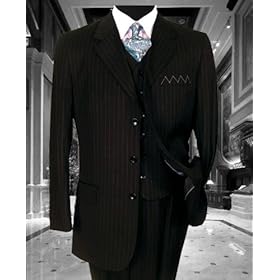 The Men of Indianapolis need our help! On November 17, 2007 Suit Up! will be hosting a suit drive to benefit men with gaining access to business clothes and professional services. It is our goal to provide gently used men’s clothing, confidence and career development support. Suit Up is a new organization that is taking the initiative to assist men in their effort to gain employment in Indianapolis.
When to donate: Saturday November, 17, 2007 from 9am to 2pm.
Where to donate: Forest Manor Multi Service Center 5603 E. 38th Street, Indianapolis, Indiana 46218
What to donate: A stylish, classy, suit, blazer or slacks that you would lend to a friend if he was going to an interview – we are looking for suits and jackets that empower men and make them feel confident!
Please bring the item or items on hangers.
Our goal at Suit Up! is to provide men with not only clothing, but with workshops on résumé writing, interviewing skills, and the necessary tools to succeed upon entering the workforce.
Suit Up! understands that if a man doesn’t have a job, he can’t afford a suit. But, without a suit, he can’t get a job! Your suit, shirt and financial contributions will make an immeasurable impact on our ability to reach men who have the ability to succeed, but need the clothes, confidence and career support to do so.
Please tell everyone you know about the Suit Up! Initiative. Donating one suit will help a man Suit Up!
Wednesday, October 17, 2007
Depression and Black Women....

Nothing funny this time. I just read the piece below by Tamara E. Holmes at the Black Enterprise web site and thought it was worth sharing here:
Mental health advocates are calling on the business community to confront depression among employees; not just in a bid to improve employees' lives but as a way to improve the business' bottom line. Unfortunately, depression disproportionately affects black women.
According to DepressionIsReal.org, depression among black women is almost 50% higher than it is among white women. And of black women suffering from depression, only 7% receive treatment. This is compared to 20% of white women.
These statistics have community leaders urging African Americans who think they are depressed to seek help by contacting a mental health professional. Last month, a panel discussion sponsored by the Congressional Black Caucus and the Depression is Real Coalition, an alliance of mental health advocates, highlighted the impact of depression on African American women.
Signs of depression include a significant change in one's mood over an extended period of time, typically for more than two weeks, says Altha J. Stewart, M.D., president of the American Psychiatric Foundation.
Other signs are lack of energy, changes in appetite, withdrawal from social events, and changes in sleeping patterns.
Depression is a business problem because "employees that are depressed have a higher rate of absenteeism, and they have low productivity, so it indirectly costs corporations," says Angie Burks, a lecturer with Indiana University-Bloomington's Kelley School of Business who has done extensive research on the topic.
Burks cites a 2006 study published in the American Journal of Psychiatry that found that a depressed worker costs employers $4,426 in indirect costs annually. "Companies encourage employees to get mammograms and get blood pressure tests but they don't encourage mental health screening," she says. "If they did it would save [businesses] a lot of money."
Another study, funded by the National Institute of Mental Health, looked at the effect of depression treatment. After screening workers for depression, researchers found that those who received enhanced therapy and medication to treat the depression were more likely to still be employed after 12 months and worked on average two more hours a week than those who did not receive more pronounced care for depression.
"Depression is not just an emotional or personal health problem," says Philip Wang, M.D., one of the study researchers. "It also impacts people's productivity at work."
While there's no shortage of statistics on depression's impact, many people don't seek treatment because of the stigma associated with it, says Stewart. Though depression is a medical problem, it "is commonly seen as a weakness or character flaw and for some people for whom religion plays a major part in their lives, it's even attributed to a lack of faith or a lack of enough faith," says Stewart.
Employers are also recognizing depression's costs. According to a survey conducted by the Partnership for Workplace Mental Health and the human resources professional trade publication Employee Benefit News, employers rated mental illness as the health issue with the biggest effect on indirect company costs.
The American Psychiatric Foundation regularly points out examples of companies that are proactive in helping employees deal with mental health issues in its newsletter Mental HealthWorks, co-published with the American Psychiatric Association. One such company, San Ramon, California-based Chevron Corp., includes in its benefits package a mental health/substance abuse plan that covers 90% of outpatient costs and offers access to therapists for such personal needs as relationship counseling.
Business leaders can play a major role in removing the stigma attached to depression and motivating depressed employees to seek help, Stewart says. "Given that most change of significance starts at the top, management has to be very clear with human resources and with supervisors that we must be proactive in both recognizing the signs of depression and ensuring that those who are suffering with depression have access to appropriate treatment."
Web resources:
Partnership for Workplace Mental Health
American Psychiatric Foundation
Depression is Real Coalition
National Institute of Mental Health
Subscribe to:
Posts (Atom)


